

First Time at the Shooting Range: A Beginner's Checklist
Posted by Point Blank Armory on Nov 27th 2026
Planning your first time at the shooting range? It can feel like a lot to take in. There are new sounds, unfamiliar commands, and a lot of people who seem to know exactly what they are doing. The good news is that a little preparation goes a long way. This guide walks through what to bring, what to expect, and the habits that will serve you well from your very first session.
Why Your First Range Trip Matters
Your first visit sets the tone for everything that follows. New shooters who learn the rules, handle firearms with discipline, and ask questions early tend to build good habits that last for years. Shooters who rush in without a plan are more likely to make avoidable mistakes, especially when they are nervous or distracted.
Think of the first trip as a learning session, not a test. Your goals are simple: stay safe, understand how the range works, and leave with a clearer sense of what you want to practice next.
What to Bring: Eye and Ear Protection, Range Bag, and ID
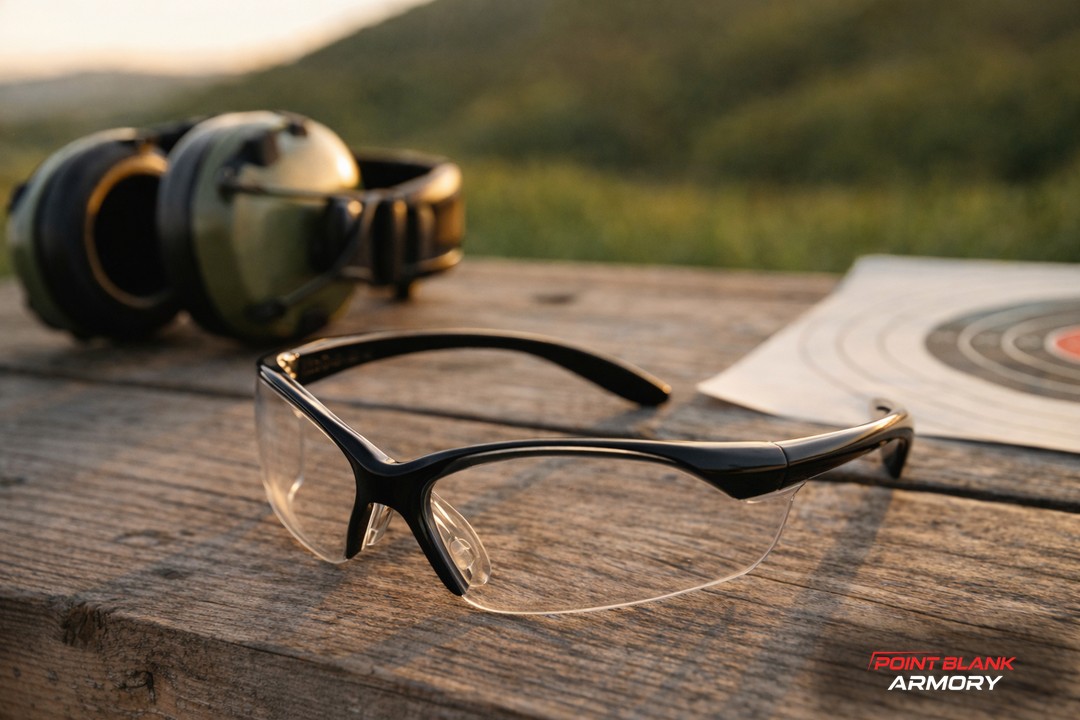
Most ranges require eye and ear protection for everyone on the firing line, and many will not let you shoot without it. Bring your own if you have it, and check with the range if you are unsure what they accept.
- Eye protection. Shooting glasses protect against debris, powder residue, and the occasional stray spark. Our Uvex Vapor II shooting glasses with a clear lens and anti-fog coating are a practical choice for indoor and overcast conditions. If you shoot outdoors in bright light, the orange lens version or the amber lens version may be more comfortable for you.
- Hearing protection. Gunfire is loud enough to cause lasting hearing damage, so ear protection is not optional. Passive muffs like the Champion Traps and Targets pink slim ear muffs are a simple, no-fuss option. If you prefer a different style, the Caldwell E-Max low profile behind-the-head electronic hearing protection is worth a look.
- Photo ID. Bring a valid government-issued ID. Ranges often ask for it at check-in, and some require a signed waiver or sign-in sheet.
- A range bag. A bag keeps your gear organized and off the dirty floor. The NCSTAR VISM range bag is a solid option for carrying glasses, ear protection, and supplies in one place.
Beyond the basics, consider packing a few extras: water, a snack, a small cleaning kit, a pen, a notepad for tracking what you practiced, and a few targets. If you plan to use a holster during a supervised drill that allows it, a small range bag pouch from Sticky Holsters can keep accessories tidy. Always check the range's rules first, since many facilities restrict holsters and carry gear to specific activities.
Know the Range Rules Before You Arrive
Every range publishes rules, and most of them are posted at the entrance or on the range website. Read them before you leave the house. Some rules are universal, and violating them can get you asked to leave on the spot.
- Keep the muzzle pointed in a safe direction at all times, downrange toward the berm.
- Keep your finger off the trigger until you are ready to fire at a target.
- Treat every firearm as if it is loaded, including when you pick it up, hand it over, or set it down.
- Shoot only the targets assigned to your lane, and never fire at anything other than paper targets on the range.
- Follow the range officer's instructions immediately, without argument.
- Do not handle firearms in the shooting bay when others are downrange, and do not handle firearms in common areas unless the range permits it.
- Leave alcohol and drugs out of the picture. Shooting impaired is dangerous to you and everyone around you.
Rules on ammunition, rental firearms, age requirements, and whether you can bring your own guns vary by facility. Ask ahead of time through the range's contact channels so you are not caught off guard at the counter.
Range Commands and Etiquette You Will Hear
Ranges use a set of spoken commands so everyone knows what is happening on the line. The exact wording varies from range to range, but you will commonly hear phrases like these:
- "Range is hot" or "Range is cold." Hot means shooting is in progress. Cold means it is safe to walk downrange or change targets.
- "Make ready." Shooters prepare their firearms and load, following the range's procedure.
- "Commence firing" or "Shooters may fire." Shooting may begin.
- "Cease fire." Stop shooting immediately and keep your firearm pointed downrange with your finger off the trigger.
- "Clear your firearm." Remove the magazine, open the action, and show that the chamber is empty.
Respond to every command promptly. If you hear "cease fire," stop, even if you are in the middle of a string of shots. If you are unsure what a command means, ask the range officer before you act.
Etiquette matters too. Be courteous to the shooters on either side of you, keep your voice reasonable, and do not step on someone else's brass or walk into another lane. Pick up your targets and trash when you leave, and leave the bench as you found it. Good manners make the range a better place for everyone.
Handling and Loading Safely at the Lane
At the lane, slow down. Most first-time safety problems come from rushing, not from bad intentions. Use these habits every time:
- Verify the firearm is unloaded before you do anything else when it arrives at your lane. Remove the magazine, lock the slide or open the action, and visually and physically check the chamber.
- Keep the firearm pointed downrange whenever it is not in a safe position on the bench or in a holder.
- Load only when instructed, and load only the caliber the firearm is chambered for. Check the markings on the barrel or slide, and confirm the ammunition matches.
- Keep your finger outside the trigger guard until the sights are on the target and you have decided to shoot.
- Stop if something seems wrong. A failure to fire, an unusual noise, or a jam should prompt you to keep the muzzle downrange, keep your finger off the trigger, and signal the range officer.
Ask for help with unfamiliar controls, such as the magazine release or slide lock. A good range officer would much rather explain it once than watch you fumble with it.
Choosing Ammo and Targets for Your First Session
For your first trip, keep the plan simple. Pick a reliable, commercially made ammunition in the caliber your firearm is designed for. If you are shooting a 9mm pistol, contact us with questions about the right ammunition for your gun, or ask the range staff what they recommend. Do not experiment with ammo that is not listed for your firearm, and never mix calibers.
Start with paper targets and a manageable distance. Many new shooters find it easier to build fundamentals at a short distance before moving back. Focus on consistent grip, a steady sight picture, smooth trigger press, and follow-through. Groups that are tight and well placed matter more than speed.
Keep your session focused. Shoot a few strings, check your targets, and take notes on what felt good and what felt off. A pad of paper and a pen in your range bag makes this easy. Many shooters find that a short, deliberate session teaches more than a long, unstructured one.
Common Beginner Mistakes to Avoid
Most new shooters make the same handful of mistakes. Knowing them ahead of time helps you avoid them:
- Skipping ear and eye protection because it feels uncomfortable at first. Your hearing and eyesight are worth the minor inconvenience.
- Touching the trigger too early, especially when handling the firearm or when startled by a loud noise.
- Ignoring the range officer or assuming you know better than the posted rules.
- Shooting too fast before fundamentals are solid. Accuracy comes first, and speed follows.
- Bringing the wrong ammunition or assuming any box of rounds will work in any gun.
- Forgetting to clean up. Pick up your brass if the range asks you to, and take your trash with you.
Why a Professional Class Is the Best Next Step
After your first range visit, the most valuable next step is structured training. A qualified instructor can watch your grip, stance, and trigger control, correct problems before they become habits, and teach you how to handle common malfunctions. That kind of feedback is hard to get on your own, no matter how many times you shoot.
Point Blank Armory offers classes that cover firearm safety, fundamentals, and the basics of responsible ownership. If you are a new gun owner, a class is one of the smartest investments you can make in your confidence and safety. Training also gives you a chance to ask questions in a controlled setting and learn from people who handle firearms every day.
Before you buy a firearm or arrange a transfer, keep in mind that firearm purchases ship to a licensed FFL and require a background check where applicable. Our transfer information explains the process. Laws on transporting firearms, carrying, storage, and magazine capacity vary by state and locality, and New York has its own restrictive rules. Verify current local law before you travel with a firearm or take one to a range, and check with the range about its specific requirements.
FAQ
What should I wear to my first time at the shooting range?
Wear comfortable, closed-toe shoes and clothing that covers your arms and legs. Avoid loose items that could catch on equipment, and tie back long hair. Bring your own eye and ear protection, since most ranges require both.
Do I need my own firearm for my first range visit?
Not always. Some ranges offer rental firearms, while others require you to bring your own. Check with the range before you go so you know what to expect and what paperwork you may need.
How do I know which ammunition to buy for my first session?
Start with the caliber printed on your firearm and choose reliable, commercially made ammunition in that exact caliber. If you are unsure, ask the range staff or contact Point Blank Armory for guidance.
Is a shooting class really necessary for beginners?
It is not legally required in most places, but it is strongly recommended. Professional instruction helps you build safe habits, improve accuracy, and learn how to respond to malfunctions. It is one of the best ways for a new shooter to build confidence.
Ready to get started? Browse our selection of range gear to build your first kit, and check our store policies before you order. If you have questions about gear, classes, or transfers, reach out to the Point Blank Armory team on Long Island. We are happy to help you arrive at the range prepared and leave with good habits.
Shop Related Gear at Point Blank Armory
- Howard Leight R01535 Uvex Vapor II Shooting Glasses Adult Clear Lens Anti-Fog Polycarbonate Black Frame
- Howard Leight R01537 Uvex Vapor II Shooting Glasses Adult Orange Lens Anti-Fog Polycarbonate Black Frame
- Howard Leight R01536 Uvex Vapor II Shooting Glasses Adult Amber Lens Anti-Fog Polycarbonate Black Frame
- Champion Traps and Targets Pink Slim Passive Hearing Protection Ear Muffs
- Caldwell E-MAX Low Profile Hearing Protection - Pink
- Caldwell E-Max Low Profile Behind the Head Electronic Hearing Protection
Always follow the four rules of firearm safety, store firearms securely, and check your current state and local laws before buying, carrying or transporting firearms. This article is general information, not legal advice.